
Cheap Eats Near the Harams: Eating Well on a Budget in Makkah and Madinah
Umrah on a budget is decided at the table. Hotels and flights are paid before you travel; food is the one cost you choose three times a day, in the moment, tired and hungry, with a food court glowing in front of you. The good news is that Makkah and Madinah feed their poorest visitors well — the cities run on cheap, hot, honest food, and a pilgrim who knows where it is can eat properly for SAR 30–45 a day without ever feeling the sacrifice. This guide is the map: the cheap streets, the benchmark prices, and the daily pattern that keeps both your budget and your strength intact.
What does cheap food actually cost near the Harams?
Hold these benchmark prices in your head (checked against current guides and menus in November 2026 — treat them as going rates, not promises):
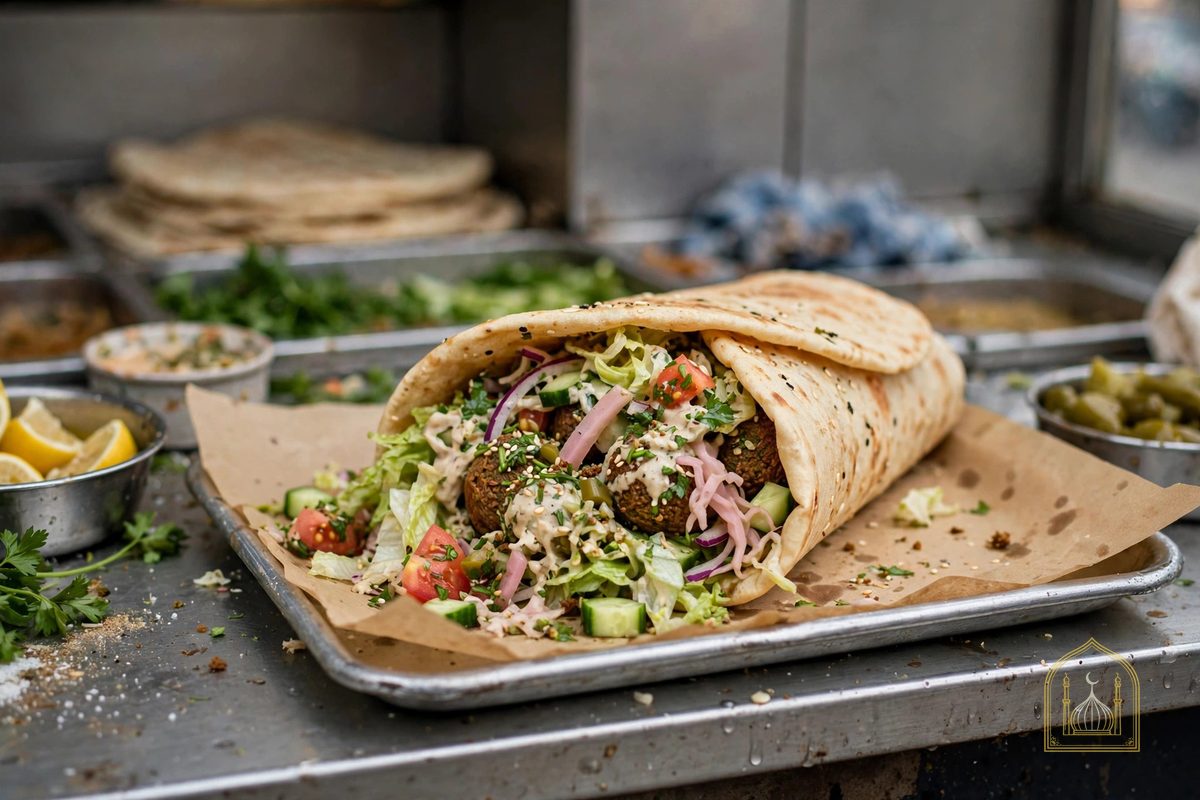
- Shawarma: SAR 5–10 in Makkah’s stalls, SAR 6–10 in Madinah
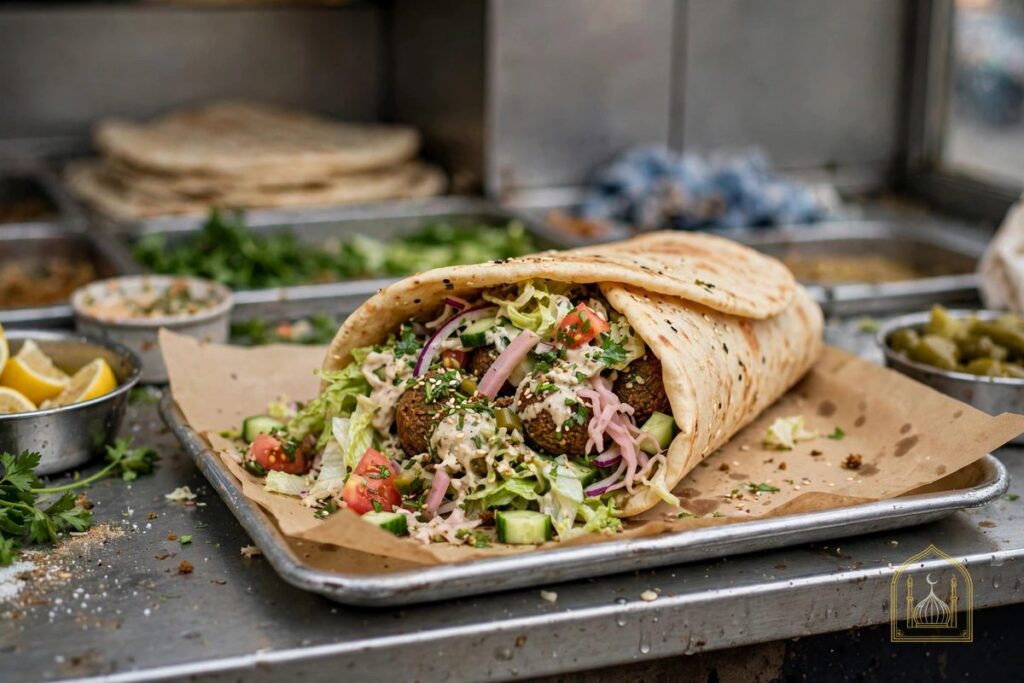
- Falafel sandwich: SAR 4.50 at Al Baik; street falafel is in the same few-riyal band
- Tamees bread with ful: SAR 2–5 at the bakeries
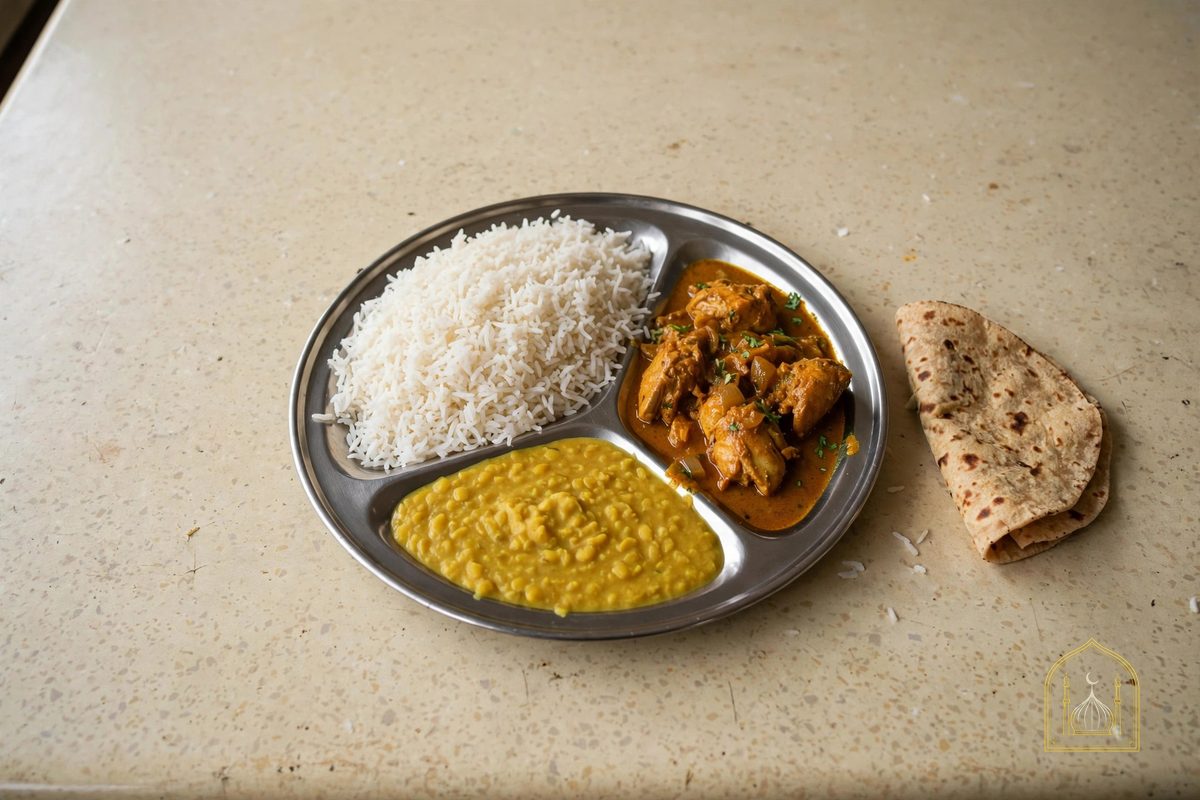
- Rice plate with chicken or dal at a South Asian cafeteria: SAR 10–15 in Makkah, SAR 12–20 in Madinah
- Mutabbaq: SAR 8–15
- Al Baik 4-piece chicken meal: SAR 17 (see the Al Baik guide)
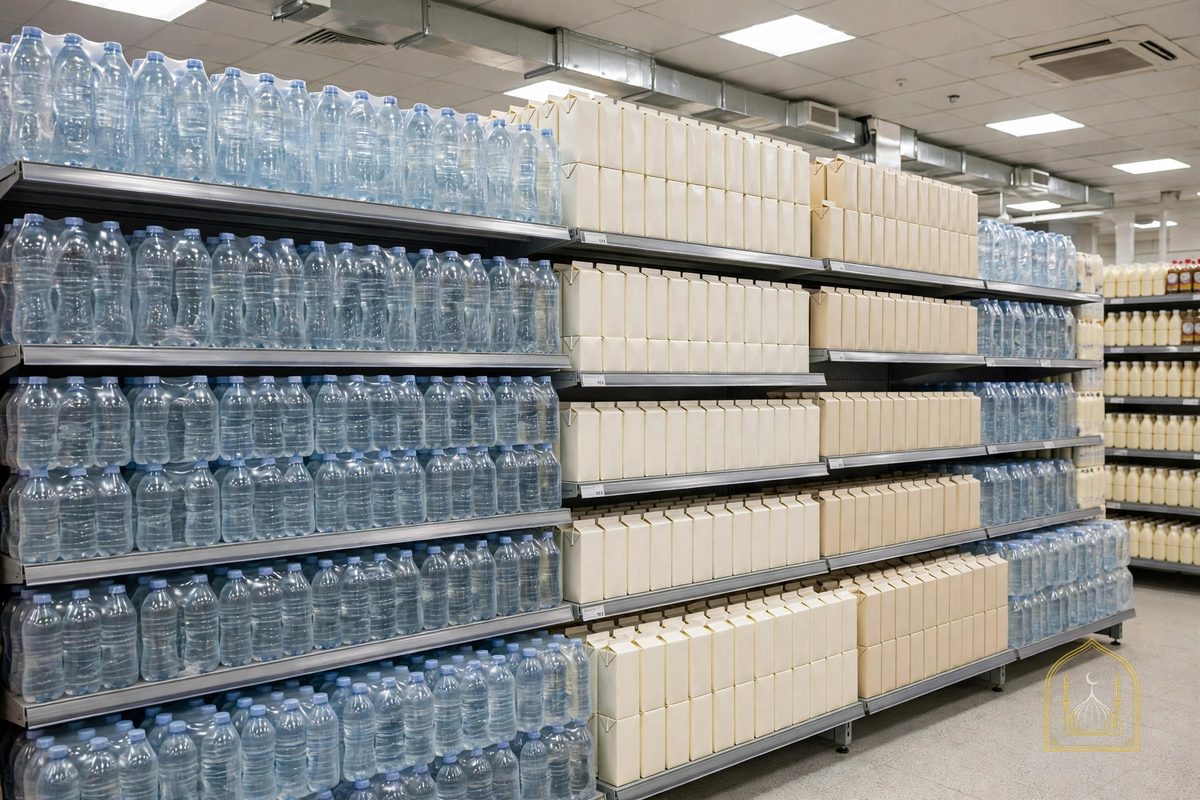
- Supermarket water: about SAR 0.5–1 a small bottle — and Zamzam inside the mosques is free
Against those numbers, the food courts’ SAR 20–50 a meal and the hotel buffets’ SAR 60 and up explain themselves: they are selling you a chair, air-conditioning and two saved minutes, not better food. Some days that trade is worth it. It should never be the default.
Where are the cheapest places to eat in Makkah?
Misfalah is Makkah’s cheap-food heartland. A few minutes along Ibrahim Khalil Road from the Haram, its Pakistani and Bangladeshi cafeterias serve a plate of rice with chicken or dal for roughly SAR 10–15, and its side lanes — the “Bangla Bazar” streets — hold named eateries like Dhaka Restaurant, Chittagong Hotel and Sonargaon, where a rice plate with daal and a curry runs about SAR 12–18. This is food cooked for workers and long-stay students: no décor, big portions, honest spice.
On Ajyad Street, the shawarma stalls (SAR 5–10) and tamees bakeries (SAR 2–5 with ful) cover the quick meals, and the side alleys behind the towers hide tiny South Asian kitchens where a paratha, daal fry, omelette and milk tea after Fajr costs about SAR 5–8. The full Makkah picture is in our Makkah food guide and the Misfalah hotels guide — stay in Misfalah and cheap food is simply your street.
Where are the cheapest places to eat in Madinah?
Madinah’s budget food has two homes. The Gate 330 stalls on the northern side of Masjid an-Nabawi sell shawarma, mutabbaq, mandi rice and snacks at SAR 5–20 — take cash, as many stalls do not take cards. The second home is the Bangladeshi and Pakistani cafeteria lanes on the western and south-western side, a few minutes from Gates 5–9 near Al-Ghamamah Mosque, where a rice plate with daal, fish or chicken costs about SAR 12–20.
Between the two, a pilgrim in Madinah can eat every meal within a ten-minute walk of the mosque for stall money. Madinah’s full food map is in our Madinah food guide.
What does a budget food day look like?
Here is a real pattern, priced from the benchmarks above:
- After Fajr — bakery breakfast: tamees, ful and tea, about SAR 5. Or a supermarket breakfast in your room — bread, yoghurt, dates — for less.
- Midday — the main meal: a cafeteria rice plate with chicken, SAR 10–15, eaten slowly in the cool of the day. This is the meal to make your biggest.
- Evening — the light meal: a shawarma (SAR 5–10) or a falafel sandwich and fries from Al Baik (under SAR 10), after Isha.
- Water: Zamzam in the mosque, free; one supermarket bottle for the room.
Total: roughly SAR 25–40 a day, eating hot food three times. Twice a week, spend the savings deliberately — an Al Baik family meal, a shared mandi — because a budget you enjoy is a budget you keep. For the wider trip maths, our Expenses section breaks down what a whole Umrah costs.
How do supermarkets cut the food bill further?
The Bin Dawood supermarkets — inside Abraj Al Bait in Makkah and in the Taiba Commercial Centre in Madinah — are the budget pilgrim’s second kitchen. As an approximate guide (supermarket prices from a 2025 pilgrim shopping guide): a small water bottle is about SAR 0.5–1 against SAR 1 at Al Baik and far more at a kiosk; a six-pack of 1.5-litre bottles runs about SAR 6–12; laban is roughly SAR 3–8 a litre; bread about SAR 2–5. Dates, cheese, yoghurt, fruit and tea turn a hotel room into breakfast and suhoor headquarters for a few riyals a day.
Two supermarket rules. First, stock up once, in the evening, rather than paying kiosk prices daily. Second, in Ramadan, shop before the last days — the pre-Eid crowds strip the shelves near the Harams. The Ramadan version of this whole strategy is in our iftar and suhoor guide.
What are the traps that break a food budget?
The first-night food court. You arrive tired, the towers are there, and SAR 50 disappears. Forgive it once; then move to the streets. Room service and hotel restaurants — the most expensive food in both cities, ordered at the hungriest moment. Buying water bottle by bottle near the gates instead of by the pack at the supermarket. Dates bought at the first shop — the same dates cost far less a street further out or at the farms (read the Ajwa dates guide before buying in Madinah). And feeding children from chains because it is easy: an 8-piece Al Baik meal feeds the family for SAR 33, which no burger chain near the Haram will match.
A final trap is false economy: skipping meals to save money, then falling ill or missing prayers from weakness. The budget above feeds you properly. Eat the meals; save on the venue, not the food.
Frequently asked questions
How much should I budget for food per day on Umrah?
A pilgrim eating from stalls and cafeterias can eat well for roughly SAR 25–40 a day. SAR 50–70 a day adds food courts and an occasional restaurant; hotel buffets and room service push it far higher.
What is the cheapest hot meal near the Haram?
A cafeteria rice plate with chicken or dal — about SAR 10–15 in Makkah’s Misfalah, SAR 12–20 in Madinah’s western lanes. For a snack, tamees with ful at SAR 2–5 is the cheapest hot food in either city.
Is street food safe to eat in Makkah and Madinah?
Generally yes, with ordinary care: choose busy stalls with fast turnover, eat food cooked fresh in front of you, and be cautious with salads and cut fruit in the heat.
Where do the cheapest restaurants cluster?
In Makkah, Misfalah and the Ajyad side streets. In Madinah, the Gate 330 stalls and the cafeteria lanes near Gates 5–9. Both are within a ten-minute walk of the mosques.
How can a family eat cheaply near the Haram?
Share platters: an 8-piece Al Baik meal (SAR 33) or a shared mandi, cafeteria plates for the main meal, and a supermarket-stocked room for breakfast. Families who share plates eat well for less than couples who order separately in food courts.