
Iftar & Suhoor in Makkah and Madinah: A Ramadan Food Guide
Ramadan turns the two holy cities into the largest shared table on earth. Every evening, millions of fasting pilgrims break their fast inside and around the two mosques — most of them eating food they did not buy, laid out by strangers — and every night the cities wake again before dawn for suhoor. For a pilgrim planning Ramadan Umrah, food works differently here than at any other time of year, and the pilgrims who eat best are not the ones who spend most: they are the ones who understand the mosque iftar, the late dinner, and the stocked hotel room. This guide explains all three. (Ramadan 1448 is expected around 8 February to 8 March 2027, subject to the sighting of the moon.)
How does iftar work at the two mosques?
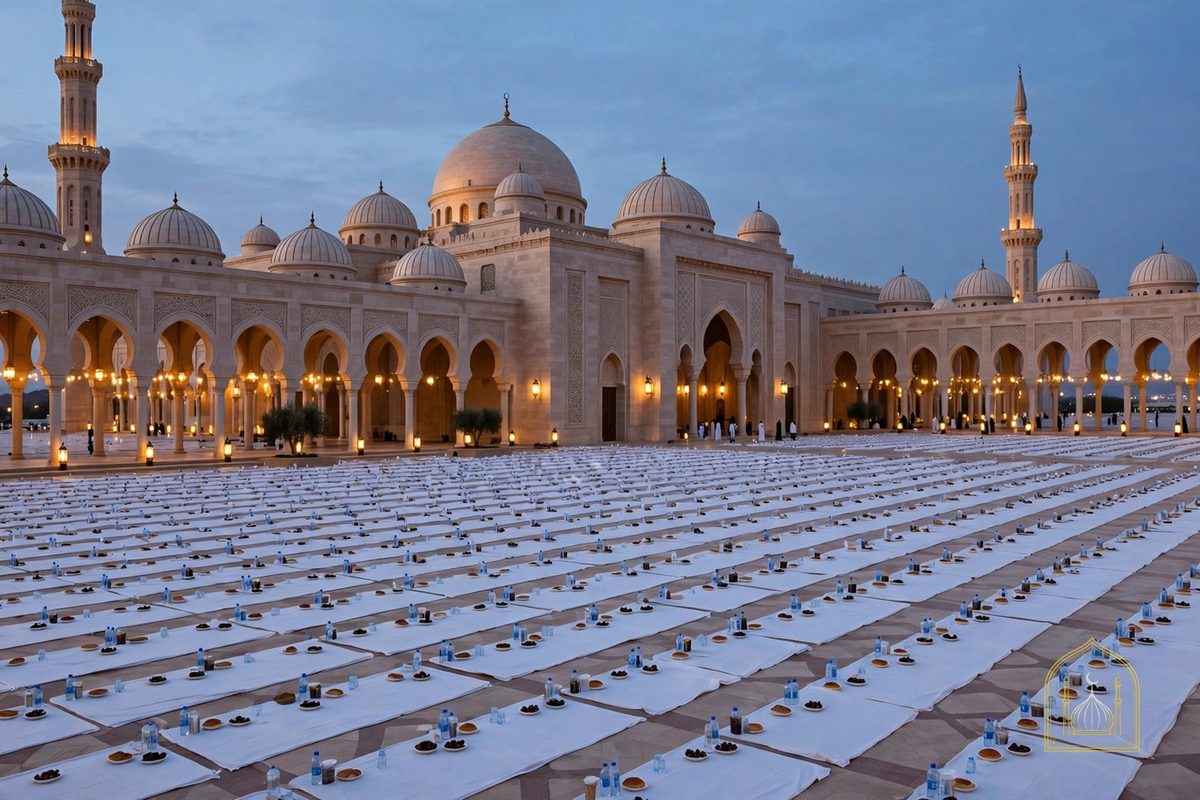
Simply: you sit down, and iftar comes to you. At both Masjid al-Haram and Masjid an-Nabawi, free iftar is distributed every evening of Ramadan to everyone seated in the designated areas, inside the mosques and across the courtyards. The scale is difficult to grasp — in Ramadan 1447 (2026), more than 33.8 million iftar meals were distributed across the two mosques under the system run by the General Authority for the Care of the Affairs of the Grand Mosque and the Prophet’s Mosque; Madinah alone accounted for over nine million.
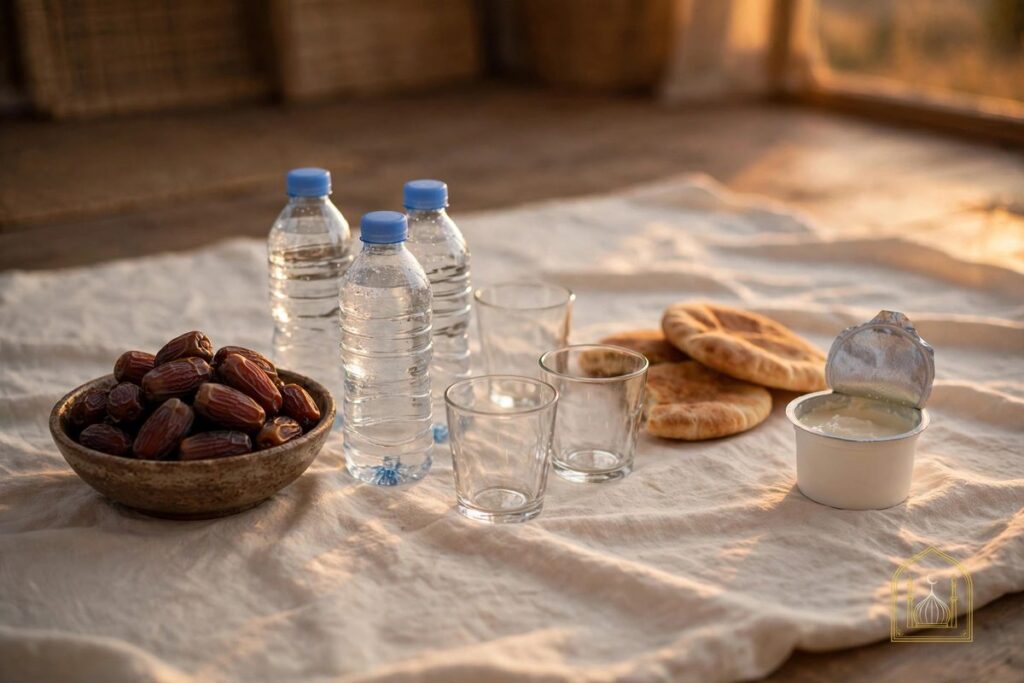
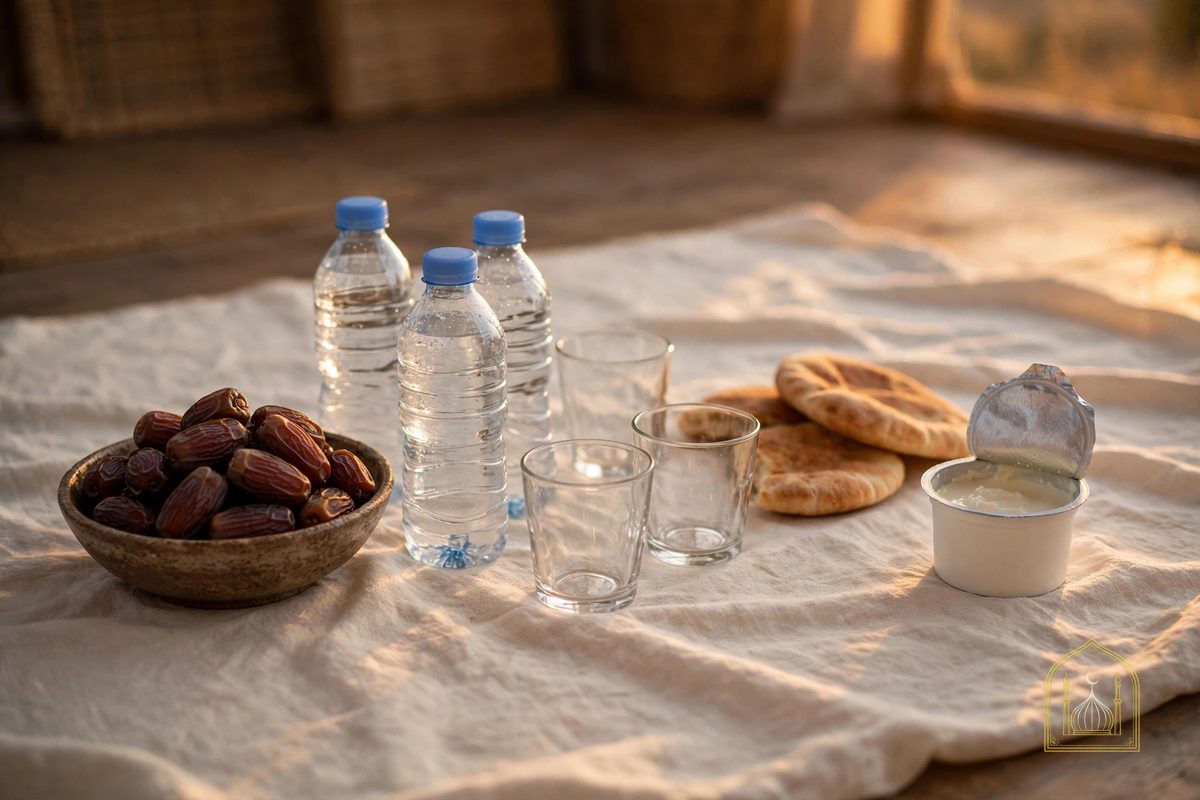
You need no ticket, no permit and no booking to receive it — the Nusuk permit is for Umrah, not for iftar. In Madinah, the spreads are laid on long sheets in the courtyards and inside: dates, water, yoghurt, bread and coffee, offered by families and charities working under official permits. In Makkah the pattern is the same — organised spreads of dates, water, laban and bread for anyone seated in and around the mosque. When the Maghrib adhan sounds, you eat where you sit; afterwards, worshippers help fold the sheets before the prayer. One rule of etiquette: distribution is permit-controlled, so do not bring food to hand out yourself.
What is served at the mosque iftar?
Understand what the mosque iftar is: a light breaking of the fast, not dinner. The classical spread is dates and water first, then laban or yoghurt, bread, and coffee — enough to break the fast gently, pray Maghrib, and leave room for the real meal later. Pilgrims who expect a full dinner at the sheet are the only ones disappointed; pilgrims who plan a proper meal after Isha or Taraweeh have the rhythm right.
The courtyards begin filling from late afternoon, and the crowd peaks just before Maghrib. If you want a place inside, arrive well before sunset — after Asr is the practical advice — and accept that in the last ten nights, every space in both mosques is claimed early. Our guides to Ramadan Umrah and the last ten nights cover the wider planning.
Where do you eat dinner in Ramadan?
Dinner is the post-Taraweeh meal, and both cities reorganise themselves around it. Restaurants and food courts that were shuttered through the afternoon reopen after Taraweeh and trade deep into the night — this is when the Makkah food streets and the Madinah centre are at their most alive. Al Baik’s queues, formidable all year, reach their annual peak on Ramadan nights; the tower food courts run at full stretch; the cafeterias of Misfalah and Madinah’s lanes serve their suhoor-bound crowds.
The tower hotels sell iftar and suhoor buffets at heavy Ramadan premiums — several hundred riyals a sitting at the top end — while the same money buys a week of cafeteria dinners. Unless a buffet is inside your room rate, the streets will feed you better for a fraction. Our Ramadan hotel strategy guide covers booking the room itself; the cheap eats guide covers the street-level maths.
How does suhoor work for pilgrims?
Suhoor — the pre-dawn meal — is eaten before the Fajr adhan, and for pilgrims it is almost always eaten at the hotel, in the last hour before walking to Fajr. The practice that works is unglamorous: eat something real, even if small; spread your drinking through the night rather than flooding at suhoor; and stop eating by the Haram’s own Fajr adhan, not a phone app’s guess.
The suhoor that never fails is the stocked room. Dates, laban or yoghurt, bread, cheese, fruit and water from a supermarket — Bin Dawood in Abraj Al Bait or the Taiba Commercial Centre — cost a few riyals a night and are ready at 3:30am without a queue. Pilgrims who rely on finding an open restaurant in the last hour before Fajr are gambling against the busiest small hour of the Ramadan night; the South Asian cafeterias do serve paratha-and-chai suhoors, and they are wonderful, but go early in the hour, not at its end.
What changes in Ramadan, city by city?
In Madinah, the daily rhythm is distinctive: shops and restaurants close through the afternoon and reopen after Taraweeh, trading until suhoor; supermarkets keep daytime hours; and in the last ten nights Tahajjud is prayed after midnight, with the mosque open through the night. The city’s Ramadan iftar, laid out across the Prophet’s Mosque and its courtyards, is many pilgrims’ single most moving meal of the trip.
In Makkah, Ramadan is the peak of the year in every sense — the mosque iftar operates at its largest scale, the streets around the Haram run all night, and the food courts and branches keep Ramadan hours that bear little relation to their normal ones. Any printed opening time from the rest of the year should be treated as suspended: check on the day, and build slack into every plan that involves a queue.
What should a fasting pilgrim eat and avoid?
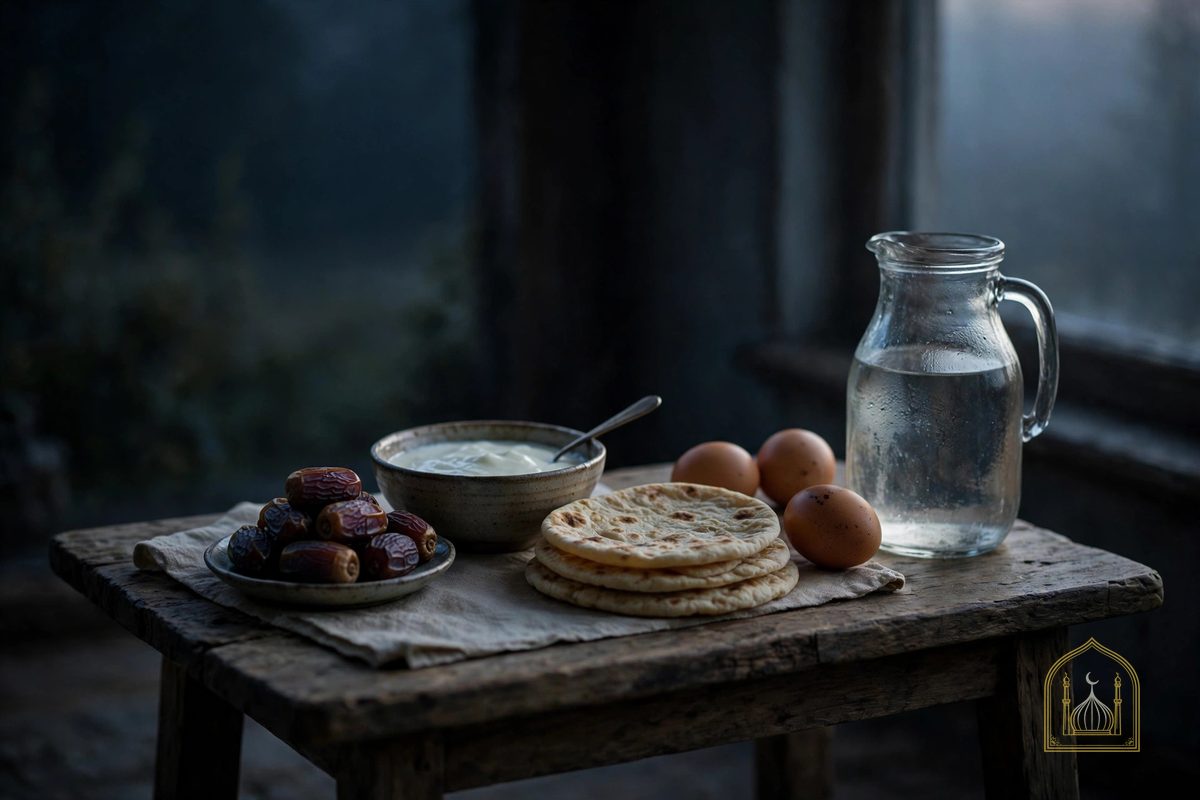
The pattern the cities themselves teach: break the fast lightly (dates, water, laban), pray, then eat the main meal later and moderately — the Taraweeh prayers that follow are long, and a heavy iftar makes them harder. Through the night, keep water going steadily; the combination of fasting, heat and walking is the real health risk of Ramadan Umrah, and dehydration ends more pilgrim days than hunger does. At suhoor, favour slow food — bread, yoghurt, eggs, dates — over a feast, and go easy on the fried and the very sweet, which bring the midday slump forward.
Elderly pilgrims and those with medical conditions should plan meals with their doctor before travel and use the hotel buffet or room suhoor rather than the courtyard rush where that is safer. The mosques’ iftar is a gift; there is no obligation to receive it in the most crowded place at the most crowded hour.
Frequently asked questions
Is iftar at the Haram really free?
Yes. Free iftar is distributed every Ramadan evening at both mosques to everyone seated in the iftar areas — dates, water, laban/yoghurt, bread and coffee — run under the General Authority for the two mosques. In Ramadan 2026, over 33.8 million meals were distributed across the two mosques. No permit or booking is needed to receive it.
Is the mosque iftar a full dinner?
No — it is a light breaking of the fast, by design. Eat the dates and laban at Maghrib, pray, and take your main meal later, after Isha or Taraweeh, when the restaurants reopen.
What time should I arrive for iftar at the mosque?
The courtyards fill from late afternoon and peak just before Maghrib. Arrive after Asr if you want a place inside — earlier still in the last ten nights.
Where do pilgrims eat suhoor?
Usually at the hotel, in the last hour before Fajr. The reliable method is a supermarket-stocked room — dates, laban, bread, fruit and water. South Asian cafeterias serve paratha-and-chai suhoors, but go early in the hour.
Are restaurants open in the daytime in Ramadan?
Many close through the afternoon and reopen after Taraweeh until suhoor, especially in Madinah. Supermarkets keep daytime hours. Hotel restaurants serve guests, at Ramadan prices.