
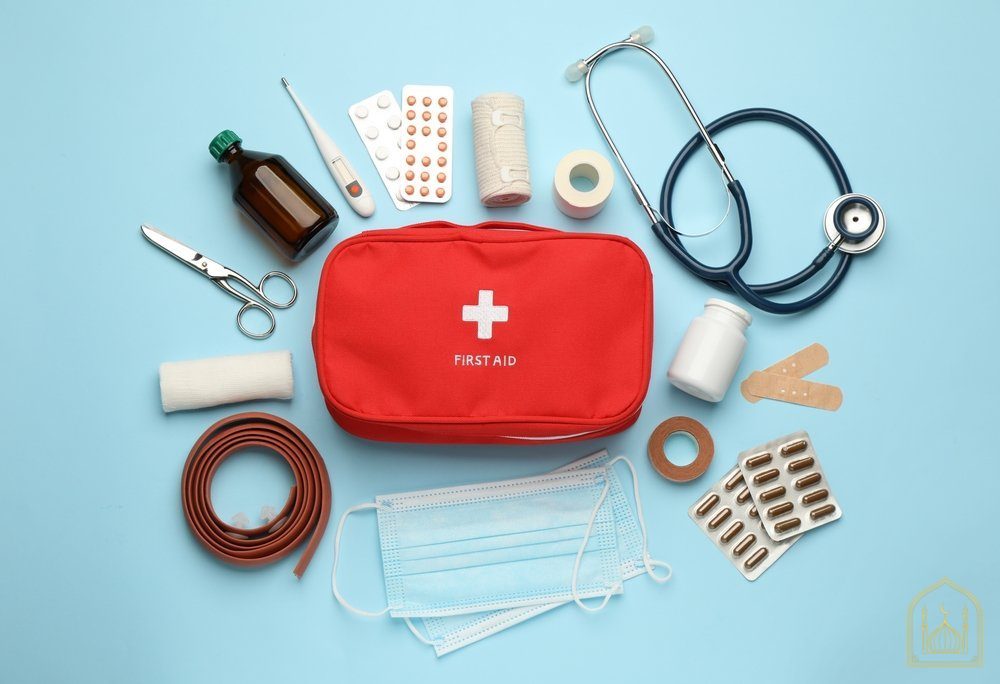
The pharmacy near your hotel can help with small things, but it cannot replace the medicines you already take — and in Saudi Arabia, most prescription medicines need a Saudi doctor’s prescription to buy. The golden rule is simple: bring enough of everything you take, in its original packaging, with the paperwork to prove it is yours. Pack it before you pack anything else.
← Back to Health & Medical Care Near the Haram
What medicines should every pilgrim carry?
The Ministry of Health’s pilgrim guidance advises carrying sufficient quantities of your medicines in their original packaging, plus documentation of any medical condition. As a base kit, most pilgrims carry: their regular prescription medicines for the whole trip plus a few extra days; a pain and fever medicine; oral rehydration salts; plasters and antiseptic; any allergy medicine they use; and lip balm and moisturiser for the dry heat. Add what your own situation needs — a glucose meter if you have diabetes, an inhaler if you have asthma, and a small first-aid kit for the day bag.
How much of my regular medicine should I bring?
Enough for the whole trip, plus extra for delays. Count the days, add a week, and pack that amount. Split it between your hand luggage and your checked bag, so a lost suitcase does not leave you without medicine. Keep the day’s dose in your hand luggage on the flight. Never put all of your medicine in one bag. And keep it in the original boxes with the pharmacy labels — loose tablets in an unmarked bag invite questions at the airport and at the pharmacy.
What paperwork should I carry with my medicines?
A letter from your doctor listing your conditions, your medicines and their doses, and any allergies. The Ministry of Health advises countries to use the International Patient Summary for this. Carry the letter in English, keep a copy on your phone, and keep the original prescriptions too. If you take a controlled medicine, check before travel whether it needs advance clearance through the Saudi Food and Drug Authority’s controlled-drug system — and do not publish a day-limit for how much you may carry, because the figures differ between sources; check the SFDA system or ask your doctor.
Can I carry someone else’s medicine?
No. Never carry another person’s prescription medicine in your bag, even for a family member. Each traveller should carry their own medicines with their own paperwork. If an elderly parent or a child travels with you, keep their medicines in their own bag with their own letter.
What if I run out of medicine in Makkah or Madinah?
Go to a health centre or a hospital clinic first — the gate health centres around the Prophet’s Mosque, or the health centres inside and around the Grand Mosque — and get examined. The doctor there can write a Saudi prescription, which you take to any pharmacy. A prescription from your home country is not ordinarily accepted. Do not buy prescription medicine from anyone other than a licensed pharmacy, and never borrow another pilgrim’s medicine.
What should go in the day bag for the Haram?
A small kit for the hours you are out: a water bottle, a few plasters, any medicine you need during the day, oral rehydration salts, lip balm, and a copy of your medical card with your conditions, allergies and emergency contact. Keep it light — you will carry it for hours — but never leave your regular medicine behind at the hotel if you need it during the day.
Frequently Asked Questions
How much medicine should I pack for Umrah?
Enough for the whole trip plus about a week extra, split between hand luggage and checked bags, in original packaging.
Do I need a doctor’s letter for my medicines?
Yes — a letter listing your conditions, medicines and doses, plus your original prescriptions. The Ministry of Health advises using the International Patient Summary.
Can I buy my prescription medicine in Saudi Arabia?
Only with a prescription from a Saudi-licensed doctor. Bring enough from home, and if you run out, visit a local health centre or hospital clinic.
What about controlled medicines?
Check before travel whether your medicine is controlled in Saudi Arabia — advance clearance through the SFDA system may be needed.
Please note: this guide shares general information for pilgrims, not medical advice. Health rules and personal needs differ from person to person, so speak to your own doctor before you travel and follow their advice.