
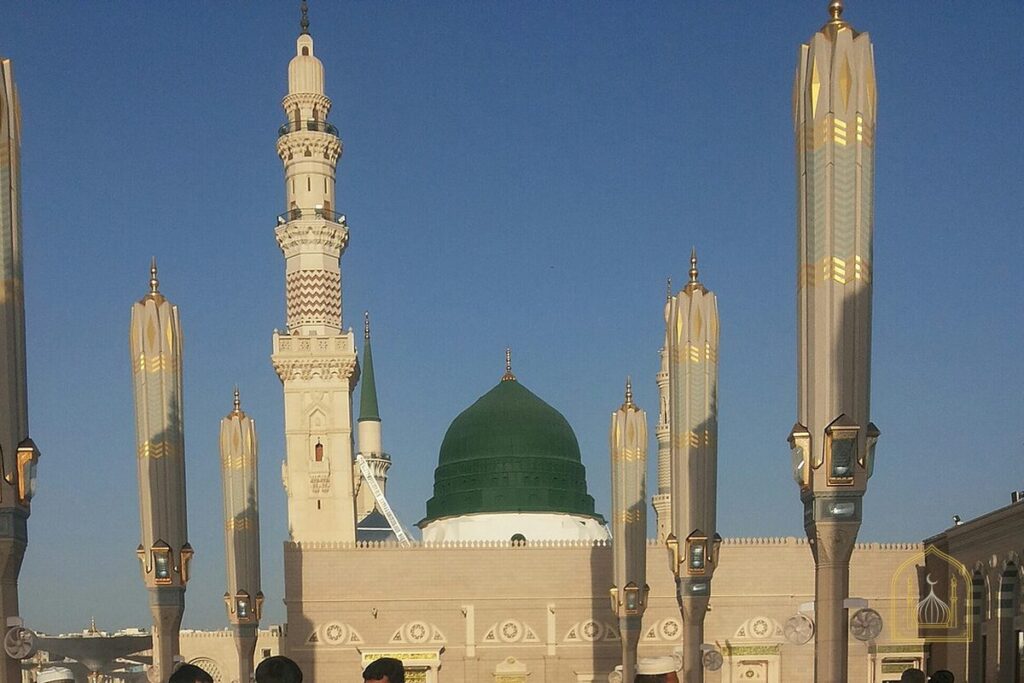
Madinah is the kinder of the two holy cities for an elderly pilgrim: the ground is flat, the mosque is ringed by hotels, and the pace is calmer than Makkah. But “easier” does not mean “easy”: five prayers a day still means five walks to the mosque, and the wrong hotel can turn a blessed trip into an exhausting one. This guide explains how to choose a hotel for an older pilgrim’s comfort, what to ask before booking, and how to pace the days.

Why is Madinah easier than Makkah for elderly pilgrims?
Three things make the difference. First, the ground: Madinah is flat, its streets level and paved, with no hills between the hotels and the gates; Makkah is built on hills, and a hotel that looks close can sit at the top of a steep slope. Second, the distances: the whole central hotel area of Madinah fits inside about a kilometre, while Makkah’s hotels spread for several kilometres. Third, the crowds: Madinah is busy, but without the crush that surrounds the Haram in Makkah at every prayer.
The mosque itself is also easier: the Prophet’s Mosque is flat, ramped and served by lifts, with free wheelchairs at the gates and dedicated prayer areas for pilgrims with disabilities. The surrounding plaza is smooth and level, and most close hotels stand within a short roll. The one pinch point is the Rawdah, where the queues and the short visit window need planning — see below.
None of this removes the need for care: an elderly pilgrim still walks a great deal, and the days are long. The hotel choice decides whether that walking is a gentle stroll or a daily ordeal, so it deserves more thought than any other booking.
Which side of the mosque should an elderly pilgrim stay on?
Choose the side that matches the pilgrim’s own gate. For an elderly woman, that means the northern side, close to the ladies’ gates — see our ladies’ gates guide. For an elderly man, the western side near Bab al-Salam is often the calmest walk — see our Bab al-Salam guide.
More important than the side is the distance: stay within 300 metres of the mosque if the budget allows, and ideally on the first row, under 100 metres. The walk is flat, but five return trips a day add up — a hotel 500 metres away means more than two hours of walking a day. The extra cost of a closer room is the best money on the whole trip — it buys rest between prayers.
If the budget does not stretch to the first row, choose a hotel 100 to 300 metres away on the right side, and plan for the older pilgrim to attend the main prayers in the mosque and pray the others in the hotel room — far better than exhausting them on the first day. Our distance guide explains the bands and what each one costs.
How do wheelchairs work at the Prophet’s Mosque?
Free manual wheelchairs are lent at service points around the Prophet’s Mosque, including near Bab al-Salam, Bab al-Siddiq, Bab al-Rahmah, Bab Jibril, Bab al-Nisa, the King Fahd Gate and gates 25, 29 and 41. You may be asked for a name, a phone number and a passport or ID; ask the mosque staff at the gate for the nearest collection point. Gate numbers are quoted in more than one system, so follow the signs and the staff rather than a number from the internet.
A borrowed manual chair assumes a companion to push it: the distances inside the mosque are long. Electric carts and buggies also operate in specific areas, for example between some gates and the women’s sections, but their routes change, so ask the staff on the day rather than planning around them.
Many hotels around the mosque also keep a limited number of wheelchairs for guests — ask at the front desk on arrival. If the pilgrim uses their own wheelchair, check with the hotel before booking that the lift is wide enough for the chair with a companion, and that the route from the lobby to the street is genuinely step-free. Private electric wheelchair hire with hotel delivery is also available in Madinah, from around SAR 100 a day for a weekly hire — but check the company and the terms yourself before paying, as this guide has not verified any provider.

What should you ask the hotel before booking?
Do not accept the word “accessible” on its own — ask blunt, specific questions: how many metres is the nearest mosque gate, and is that route flat and ramped? Is the route from the lobby to the street genuinely step-free? How wide is the lift — will it take a wheelchair with a companion? Is there a roll-in shower, or at least a shower seat and grab rails? Does the hotel keep wheelchairs for guests?
Ask about the room itself: a room on a lower floor, near the lift, saves a long corridor walk; a kettle and a fridge make early mornings and medicines easier; and a quiet room away from the street means better sleep, which an elderly pilgrim needs most. Ask how far the nearest hospital or clinic is — there is a health centre on the south side of the mosque.
How do you pace the days in Madinah?
Plan the days around the pilgrim, not the group. Go to the mosque for Fajr, then rest until mid-morning, and visit the Rawdah or the ziyarat sites in the cooler part of the day, not at midday. Pray Dhuhr and Asr in the mosque if the pilgrim is rested, or in the hotel room if they are not. Keep Maghrib and Isha for the mosque, when the temperature has dropped.
Build in a full rest day after arrival, and do not plan the Rawdah visit for the first day — the pilgrim will be tired from the journey, and the Rawdah queue is the most demanding part of the trip. Keep water and a snack in the room, and carry water to the mosque.
What about the Rawdah for an elderly pilgrim?
The Rawdah is the one part of Madinah that needs real planning. Entry is by free permit booked through the Nusuk app, with separate slots and entry routes for men and women, and the visit itself is short and managed — there is waiting, walking through the prayer halls, and a brief time in the Rawdah itself. Men generally enter through Gate 37, and women through Gate 25; follow the gate on your own permit.
Book the permit for a time when the pilgrim is at their best — usually the morning slot — and arrive early with the permit’s QR code ready. If the pilgrim uses a wheelchair, tell the mosque staff at the gate and ask for the accessible route. If the pilgrim cannot manage the queue at all, remember the Rawdah is a privilege, not an obligation.

Frequently asked questions
Is Madinah suitable for elderly pilgrims?
Yes — the easier of the two holy cities. The ground is flat, the mosque is ramped and served by lifts, and the central hotels are close. But the days are long, so choose a hotel within 300 metres of the mosque.
How close should an elderly pilgrim’s hotel be to the mosque?
Within 300 metres if the budget allows — ideally on the first row, under 100 metres. A hotel 500 metres away means more than two hours of walking a day, too much for most older pilgrims.
Are wheelchairs available at the Prophet’s Mosque?
Yes. Free manual wheelchairs are lent at service points around the mosque, including near Bab al-Salam and gates 25, 29 and 41, usually against a name, phone number and ID — and a companion is needed to push one.
Can an elderly pilgrim visit the Rawdah?
Yes, with a free permit booked through the Nusuk app. Book a morning slot if possible, arrive early, and ask the mosque staff for the accessible route.
What should I ask a Madinah hotel before booking for an elderly parent?
The distance in metres to the nearest gate and whether the route is flat and ramped; whether the lobby-to-street route is step-free; the lift width; whether there is a roll-in shower or grab rails; and whether the hotel keeps wheelchairs.
Is it better to stay in Madinah longer and Makkah shorter with an elderly pilgrim?
Often, yes. Madinah is flatter, calmer and cheaper, and the prayer there is unhurried — extra nights in Madinah are often worth more than extra nights in Makkah.