
Makkah has a public bus network called Makkah Bus, and for pilgrims staying away from the Haram it is the cheapest way to get around the city: a flat SR 4 a ride, on 12 routes that run around the clock. This guide covers the fare, the routes pilgrims actually use, the four central stations around the Grand Mosque, and the buses to the miqat mosques.

How much is the bus fare in Makkah?
Every Makkah Bus journey costs a flat SR 4. The fare has applied since the paid launch on 1 November 2023, when it replaced the free trial that ran from the network’s February 2022 launch. Older guides that call Makkah Bus free are out of date. There are no zones and no distance bands to calculate — one ride, one fare — and the same SR 4 covers the long cross-city routes as well as the short hops between the central stations.
Buy your ticket through the Makkah Bus app or website, or from vending machines at the main stations. The network is run by the Royal Commission for Makkah City and Holy Sites (RCMC) and operated by the Modern Bus Company. It runs about 400 buses over 431 stations and roughly 580 km of routes, and has carried more than 188 million riders since launch, according to Saudi Press Agency figures from January 2026.
Which bus routes do pilgrims use most?
The network has 12 routes, numbered 1 to 12. The ones pilgrims ask about most are:
- Route 6 — Ar Rusayfah (Haramain station) to Al Abdeyah and Umm Al-Qura University, through Al Naseem. This is the Haramain station to city corridor.
- Route 7 — Ash Shubaikah to the Haramain High-Speed Railway station, tying the central area to the train.
- Route 11 — Ash Shuhada to Ibrahim Al-Khalil Station, passing Ar Rusayfah on the way.
- Route 12 — Jabal Al-Kaaba station (Jarwal) to the Aisha Mosque at Taneem, every 10 minutes — the network’s best published frequency.
- Route 10 — Al Gazzah to Ju’ranah, the northern miqat.
- Route 5 — Ajyad Station to Al Awali, and Route 4 — Al-Marwa Station to Kudai, the two most useful routes for pilgrims staying in the southern districts.
Where RCMC publishes a timetable grid, buses run every 10 to 16 minutes — route 12 every 10 minutes, routes 1, 3, 4, 5, 6, 8 and 11 about every 12 minutes, tightening to roughly every 7 minutes at busy times, and route 9 every 15 minutes. Three routes (2, 7 and 10) have no published grid, so no frequency is claimed for them. The network operates around the clock, with published timetable grids running from 04:00 through to past 02:00.
Where do the buses stop near the Haram?
Makkah Bus does not run every route to the Grand Mosque’s doors. Instead, routes terminate at four central stations placed around the Haram, each a short walk from a different side of the mosque. Knowing which station your route uses is the key to using the network:
- Al-Marwa Station — the Al Gazzah side, north-east of the Haram. Terminus of routes 4 (to Kudai) and 8 (to Um Ajud).
- Jabal Al-Kaaba Station — Jarwal, on the northern side, by the intercity bus terminal district. Terminus of route 2 (from An Nawwariyyah) and of the Taneem route 12.
- Ajyad Station — south of the Haram, on the Ajyad corridor. Terminus of route 5 (to Al Awali).
- Ibrahim Al-Khalil Station — serving the Al Hajlah side. Terminus of route 11 (from Ash Shuhada via Ar Rusaifah).
Staying near the Haram is a matter of side: north-side hotels work with Jabal Al-Kaaba and Al-Marwa, and the Ajyad and Al Hajlah hotel districts work with Ajyad and Ibrahim Al-Khalil. Cross-city routes such as the 3, 6 and 9 feed into these stations and the central stops along Al Masjid Al Haram Road.
How do you get to the miqat mosques by bus?
Two routes matter for Umrah logistics. Route 12 runs every 10 minutes from Jabal Al-Kaaba (Jarwal) to the Aisha Mosque at Taneem, the nearest miqat to the Haram and the standard trip for pilgrims renewing ihram. Route 10 runs from Al Gazzah to Ju’ranah, the miqat for residents of Makkah’s north side entering ihram for Umrah. Both are ordinary SR 4 city routes — there is no special Umrah fare or separate pilgrim service to look for.
The rules of ihram themselves are a matter for scholars, not for a bus guide. What the bus gives you is a cheap, frequent ride to the mosque where ihram is entered — and a ride back.
How do the buses work in Hajj and Ramadan?
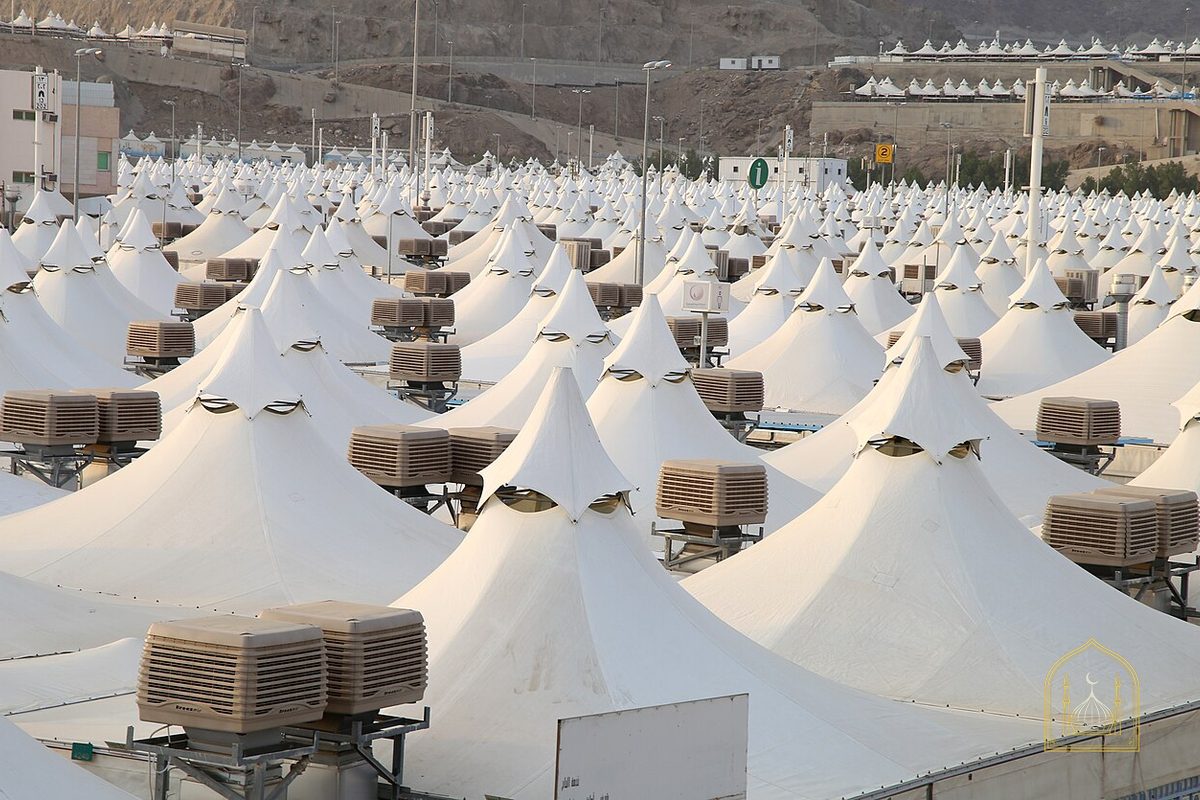
During Hajj, Makkah Bus operates under a dedicated Hajj operating plan and the central area is reorganised around pilgrim flows, so some regular patterns change. The Al Mashaaer Metro that serves the Hajj sites (Arafat, Muzdalifah, Mina) is a separate, Hajj-only railway — it is not part of Makkah Bus and does not run outside the Hajj season.
In Ramadan, expect the heaviest demand around Taraweeh and in the last ten nights; the 24-hour network and the 10 to 12 minute frequencies on the central routes are built for exactly this. A dedicated women-only bus service at the Grand Mosque was also announced in March 2025, with female staff and buses stationed near the Al-Marwah Gate, to help women pilgrims move within the holy site at busy times.
In Madinah, the buses work differently — see Madinah City Buses: Routes, Fares and the Haram.
Frequently asked questions
How much is the bus fare in Makkah?
SR 4 flat on every Makkah Bus route, since 1 November 2023.
Are Makkah buses free?
No. They were free during the trial period (February 2022 to October 2023) but have cost SR 4 since the paid launch.
Do all Makkah Bus routes go to the Grand Mosque?
No. Routes terminate at four central stations around the Haram — Al-Marwa, Jabal Al-Kaaba, Ajyad and Ibrahim Al-Khalil — each a short walk from a different side of the mosque.
Which bus goes from the Haramain station into Makkah?
Route 6 (to Al Abdeyah via Al Naseem) and route 7 (to Ash Shubaikah); route 11 also passes Ar Rusaifah.
How do I get to Taneem (Aisha Mosque) by bus?
Route 12 from Jabal Al-Kaaba station (Jarwal) — every 10 minutes in the published grid, SR 4.
How do I pay for Makkah Bus?
Through the Makkah Bus app or website, or at station vending machines.